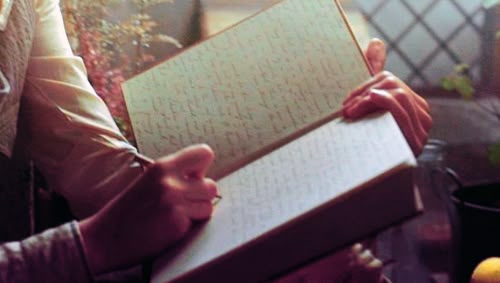
Some stories never found readers. They lived quietly between yellowing pages, wrapped in dust and silence, waiting for someone anyone to open them again.
Across India, in wooden trunks and steel cupboards, lie thousands of forgotten diaries. Some belong to people long gone; others were abandoned mid-sentence. The handwriting may have faded, but the ink carries something time can’t erase the humanness of memory.
Every diary is a small rebellion against forgetfulness. It says, “I was here. I felt this.”
When Paper Was the First Social Media
Long before we started pouring our emotions into posts and captions, we had silent companions. These companions were notebooks that held everything we couldn’t tell the world. Diaries were the first social media, except they demanded no audience. They listened without judgment, without needing validation.
During the 1940s and 50s, as literacy spread across towns and small cities, diary-keeping became a quiet ritual. People documented everyday life the rain, the ration queues, the heartbreaks. During Partition, they recorded loss. During the Emergency, they wrote in metaphors to stay unseen. Each page was a witness to personal histories that never made it to textbooks.
Finding one now feels like discovering an emotional fossil. Archivists across India have found lost diaries in scrap shops, attics, and abandoned homes fragments of unseen lives. Some hold love notes beside grocery lists; others capture years of solitude. Unlike official records, they preserve the texture of ordinary existence.
And yet, most of these voices fade away. When their writers die, diaries often vanish too mistaken for clutter, burned for privacy, or lost to damp walls. We live in an age obsessed with documenting everything, yet we’ve forgotten how to remember deeply. We’ve become collectors of pixels but destroyers of paper.
The lives we forgot to remember
Still, some stories refuse to be erased.A Delhi teacher once stumbled upon a diary in a roadside scrap shop. It belonged to a woman named Kamla. She wrote between 1957 and 1962 about her arranged marriage. She also wrote about her loneliness and the joy of watching her children learn to write their names. No one knows who she was, but through her words, she became immortal.
There are many Kamlas across India. They are nameless diarists who poured their hearts into the paper. They hoped it would listen when the world couldn’t. Their diaries are not grand histories, but they are the truest kind: intimate, flawed, and beautifully human.
Somewhere along the way, we stopped writing for ourselves. We type to be seen, not to remember. The habit of keeping a diary faded as technology rose; screens replaced stationery, emojis replaced adjectives. What once demanded vulnerability became a performance.
Maybe it’s time to write again
But maybe it’s time to return. To write again not for aesthetics or likes, but as an act of emotional preservation. Writing privately is a kind of therapy, a way to speak to the soul. You don’t need a vintage journal or fancy pen. Just honesty.
One day, someone might find your words and realize they weren’t alone in feeling the way you once did.
Diaries may be disappearing, but the instinct to document remains alive in captions, notes, and voice memos we never share. That’s what writing really is not a plea to be remembered, but an effort to remember.
So if you ever find an old diary, don’t throw it away. Read it gently. Someone once poured their entire world into those pages, hoping that maybe, someday, someone would listen.
And today, that listener could be you.




Leave a Reply